
Paperealities

Dear Bureaucritics,
Anyone who has ever argued with a registry knows that, in the administrative universe, the written record tends to win its disputes with undocumented realities. Officially, to exist is to appear in a log, somewhere; everything else can hardly be properly accounted for. In 1998, David Dery gave this old office intuition a name, when he coined the term “papereality” in an eponymous article published in Administration & Society (29.6). “Papereality” describes the peculiar ontology of bureaucratic institutions, which “live by, maintain, and modify an autonomous world of their own creation” (687): a “world of symbols, or written representations, that take precedence over the things and events represented” (678).
As we’re sensing our way forward through a mingle of paperealities and “data worlds” (a term used by Katherine Bode and Lauren Goodlad in the inaugural edition of Critical AI, back in 2023), this seventh issue of our newsletter aims to provide some orientation—particularly useful for those looking for landmarks of bureaucritical infrastructure and destinations for (real or virtual) summer getaways.
Fittingly for a dispatch concerned with worlds conjured into being, we’re starting off the journey noting that the Cultural Bureaucracy Studies Network now lives at its own address, bureaucritics.com. Plans for future events under its letterhead are already in the making, and new ideas are always welcome. If you would like to join the emerging membership, the procedure is light on red tape: simply send a short bio highlighting your contributions to the field to bureaucritics@gmail.com.
A first holiday tip for the administratively inclined traveller: did you know that Linz is home to a tax museum? Should Austria not figure in this summer’s itinerary, scroll down for further bureaucratic destinations and happenings – in focus, Sweden and Brazil.
Beach Reads
We’re well stocked in the summer readings section. Friends of the newsletter have helped populate the shelves:
drinking stories of British civil service clerical workers gathered in Newcastle upon Tyne between 1968 and 1993? Michael Vine writes about them in “Beyond the Sober State: The Work of Drunkenness in British Bureaucracy,” Sociology Lens (2026): 1–11. Check ✔
study on the use of faxed wirephotos at the Royal Canadian Mounted Police? Check ✔
essays on AI as social technology driving the disingenuous promise of a post-human bureaucracy, or on current efforts to regulate AI? Check ✔ and check ✔
In addition, from the literary studies department:
two fresh articles from Jonathan Foster. First, a literary overview of the theme of Administrative Worlding: Paperealities and Bureaucratic ‘Trompe L’oeil’ in Fictional Representations of the British State. Second, a close-reading stroll through Woolf’s Westminster: Decentering the State in Mrs. Dalloway.
an upcoming edited volume on bureaucratic writing scenes, looking at desks from a media, theatre, and literary studies perspective – Bürokratische Schreibszenen: Schreibtische aus medien-, theater- und literaturwissenschaftlicher Perspektive (Brill | Fink, August 2026). Edited by Rüdiger Campe, Johanna Kasmann, and Jessica Maaßen.
“While the ‘home office’ promises a new way of working, tensions often arise between ‘home’ as a private space and ‘office’ as a sphere of bureaucracy. The private sphere generates resistance that must be curtailed to make (more) room for work. Volume 32 of the ZGDS series deals with such power struggles at or around the desk. Etymologically, bureaucracy is understood as desk-based rule in two directions: on the one hand, power is exercised from the desk; on the other hand, power relations are fought out at the desk through writing. Desks become stages for the bureaucratic, which are examined from media studies, theater studies, and literary studies perspectives. Bureaucracy is explored in writing scenes as “imperatives of its staging” (Campe), scenes that not only implicitly contain its imperatives but also explicitly make such imperatives within a power structure legible in theatrical form.”
Official Wavelengths
Assembled by the O.J.A.I. for Cashmere Radio, Bureaucratic Resonance presents music production emanating from and adjacent to bureaucratic systems, administrative environments, and institutional culture.
The 1-hour program features archival material alongside music inspired by offices, corporate and governmental procedures, spoken word compositions and works that refer to bureaucratic language, processes and aesthetics. While the transmission ranges across different periods, the main focus lies in the late twentieth century, particularly the 1970s and 1980s.

Listen here.
Experiments, Arts, Crafts
Crafty, multidisciplinary practitioners, technologists, and systems thinkers have once again been summoned, as bureaucracy gets promoted to the status of annual research theme over at the Wübben Stiftung. Their Sandpit programme dedicated its 2026 edition to “Understanding, Shaping, Changing Bureaucracy,” offering 50,000 euros for a three-day interdisciplinary research sandpit open to post-doctoral researchers at German universities.
June 2026 saw another edition of the Creative Bureaucracy Festival in Berlin, with dates already set for reconvening next year. And although they’ve been around for a while, we’ve recently learned about Policy Lab UK and their experimental approach to policy making, involving artists and ethnographers.
For those who prefer their paperwork green, the French program Biodiversité Administrative tries out various ways of writing the non-human living world into public administration. Run by the design agency Vraiement Vraiement with the Banque des Territoires, the exploratory public policy program drafts the natural world into public service, including a “’microparliament of living beings.”
Meanwhile, the City of Paris works to preserve the “professional memory” of its 300+ municipal roles. Beyond historical documents, the PatPro project also focuses on the “gestures, tools and objects” of the administration, turning the mundane reality of public service into a virtual exposition with a performative-phenomenological twist.
Workshops, Conferences, Seminars
The first half of 2026 kept the field’s calendars thoroughly busy. Here’s the paper trail, with links to the respective programs:
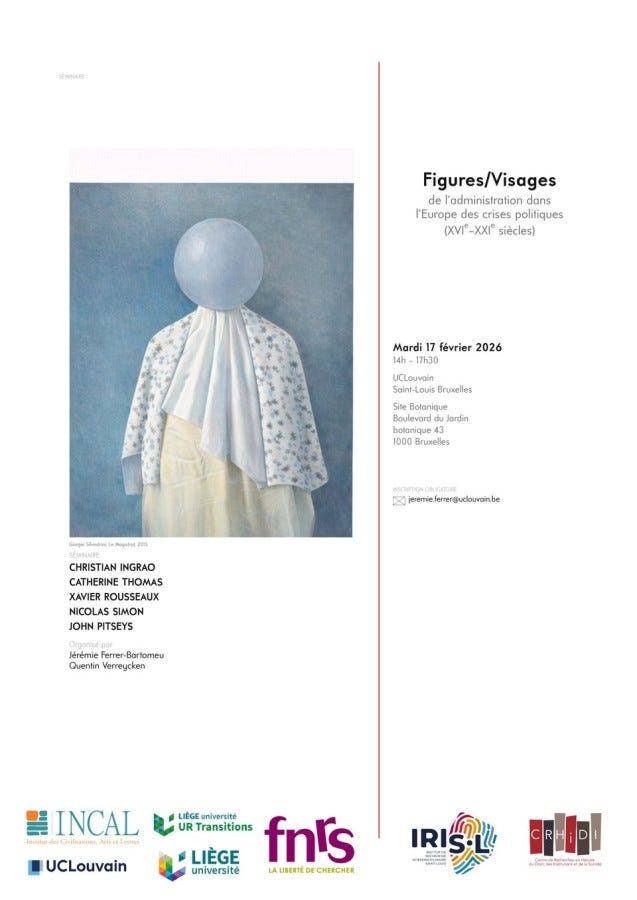
Bruxelles, February 17, 2026 (French): Jérémie Ferrer-Bartomeu and Quentin Verreycken convened Figures/Faces of Administration in Europe in Times of Political Crises (16th–21st Century), a workshop at UCLouvain Saint-Louis Bruxelles.

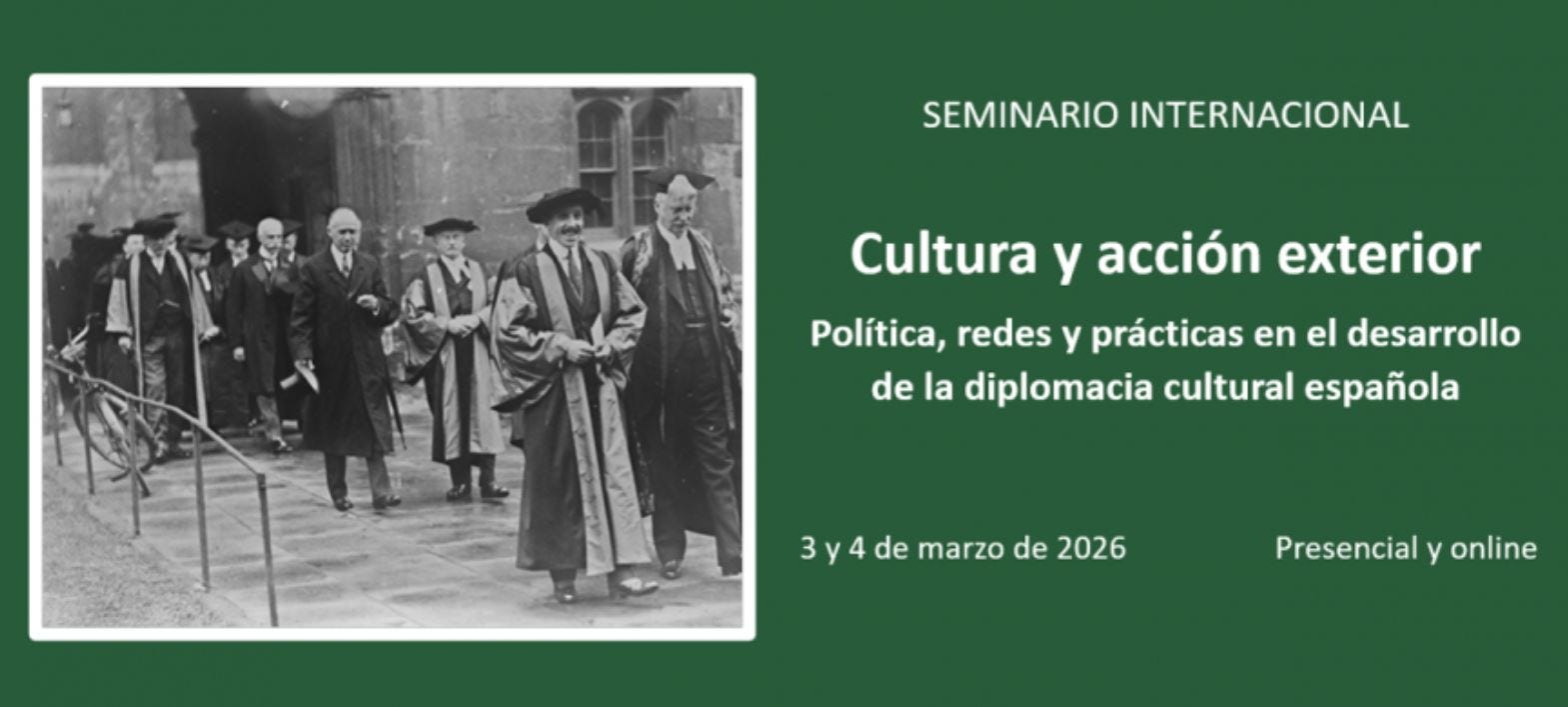
Madrid, March 3-4, 2026 (Spanish): Charles III University of Madrid hosted an international seminar on Spanish diplomacy, cultural action, and intellectual cooperation.
The session devoted to the role of philology in international diplomacy included Ana I. Romero Sire’s presentation on the exchange between Eugenio d’Ors and Carl Schmitt at the 1929 International Exhibition in Barcelona.
Vienna, May 27-29 (German): Spring brought a distinctly enumerative turn with Listen der Verwaltung, a conference devoted to that most unassuming of administrative genres: the list.
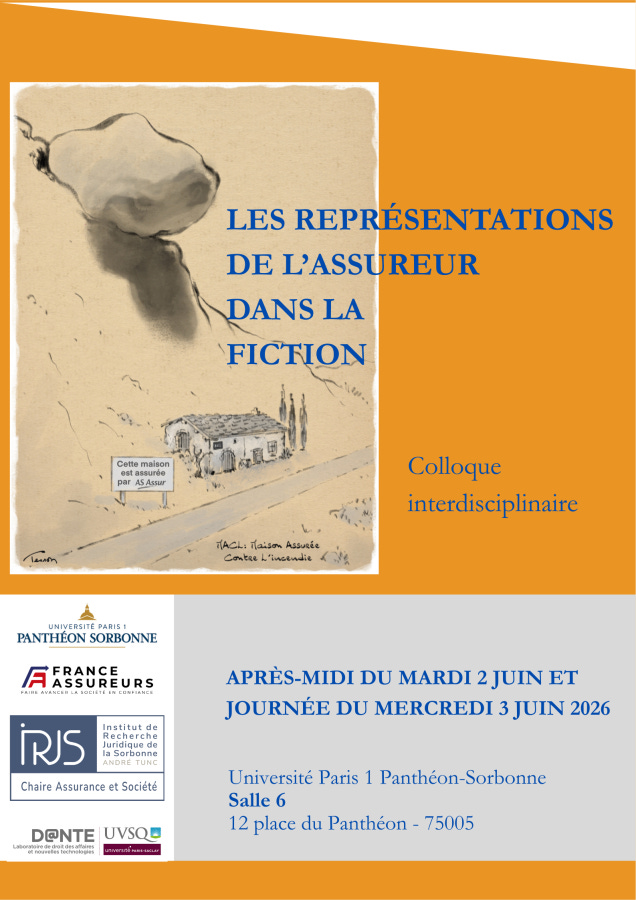
Paris, June 2-3, 2026 (French): The Faculty of Law at Université Paris I Sorbonne hosted Les représentations de l’assureur dans la fiction, a conference on portrayals of insurance and insurance workers in literature—proof that even actuaries have their poetics.
Vienna, June 24-26 (English and German): The WEAVE project Bureaugraphies, featured in our previous issue, held its conference Bürographien: Zur Archäologie der Verwaltung, excavating a century of administrative culture across four sections.
Bonus find from the 2025 archives:
New York, February 14, 2025: Chaired by art historian Colby Chamberlain (author of the acclaimed Fluxus Administration), the CAA panel titled Institutional Fatigue in the Twenty-First Century asks: Has institutional critique run out of steam?
“For the past two decades, it has felt increasingly inadequate to voice criticisms from within the established frameworks of the art world’s institutions—its museums, its galleries, its publications, its schools. Instead, the rhetoric has shifted to occupying, liberating, or decolonizing institutions. Reform-minded recommendations for granular measures, like divestment or unionization, are balanced against calls for boycott and abolition. Meanwhile, multiple institutions have seemingly imploded from within, unable to reconcile their founding principles with current political realities. Have we grown tired of our institutions, or are our institutions simply exhausted?]
The session gathered presentations on the changing relation between art and its institutions in the past two decades marked by polycrisis. The presentations delivered by Samuel Shapiro, E. C. Feiss, Brianne Chapelle, Philip Kelleher, and Luke Skrebowski received responses from Alexander Alberro.”
Project Bookends: Bureaucriticism Beyond the West
The results of the 2022-2025 DFG project Small-Scale Sovereignty [Kleine Souveränität. Personale Herrschaftsformen des Alltags und ihre Darstellung im hispanoamerikanischen Roman des 20. und 21. Jahrhunderts], led by Jan-Henrik Witthaus at the University of Kassel, are now freely accessible online.
The collection includes original bibliographies of primary and secondary literature, index cards for selected works in Latin-American office literature, and the script for a creative stage reading.
Another project that coincidentally ran in the same timeframe, albeit on a different register of normativity altogether, is Islamic Public Value: Theory, Theology, and Practice of Indigenous Cooperative Governance Institutions, hosted by University College London’s Institute for Innovation and Public Purpose. The team studied centuries-old indigenous cooperative governance institutions across the Islamic world, from zawāya in North and West Africa to mahalla in Central Asia, asking what public administration looks like when its ethical foundations are drawn from Islamic tradition.
In 2025, the South African think-thank New South Institute hosted a virtual launch for Beyond Mimicry. Available in Open Access, the book explores African endogenous governance systems and looks at how to move past the paradigm of administrative imitation. If you’re interested in non-standard bureaucratic histories and in forms of early African social organization, you might enjoy the video of the event.
In Focus: Sweden
During this year’s Stockholm Culture Night, Byråkrati-Baren (the Bureaucracy Bar)—perhaps the first bar of its kind—opened for one night at Kulthurhuset in central Stockholm. The tables were laden with office paraphernalia and the stage arranged to look like an office.
This set the scene for an evening of bureaucracy-themed talks and live music.
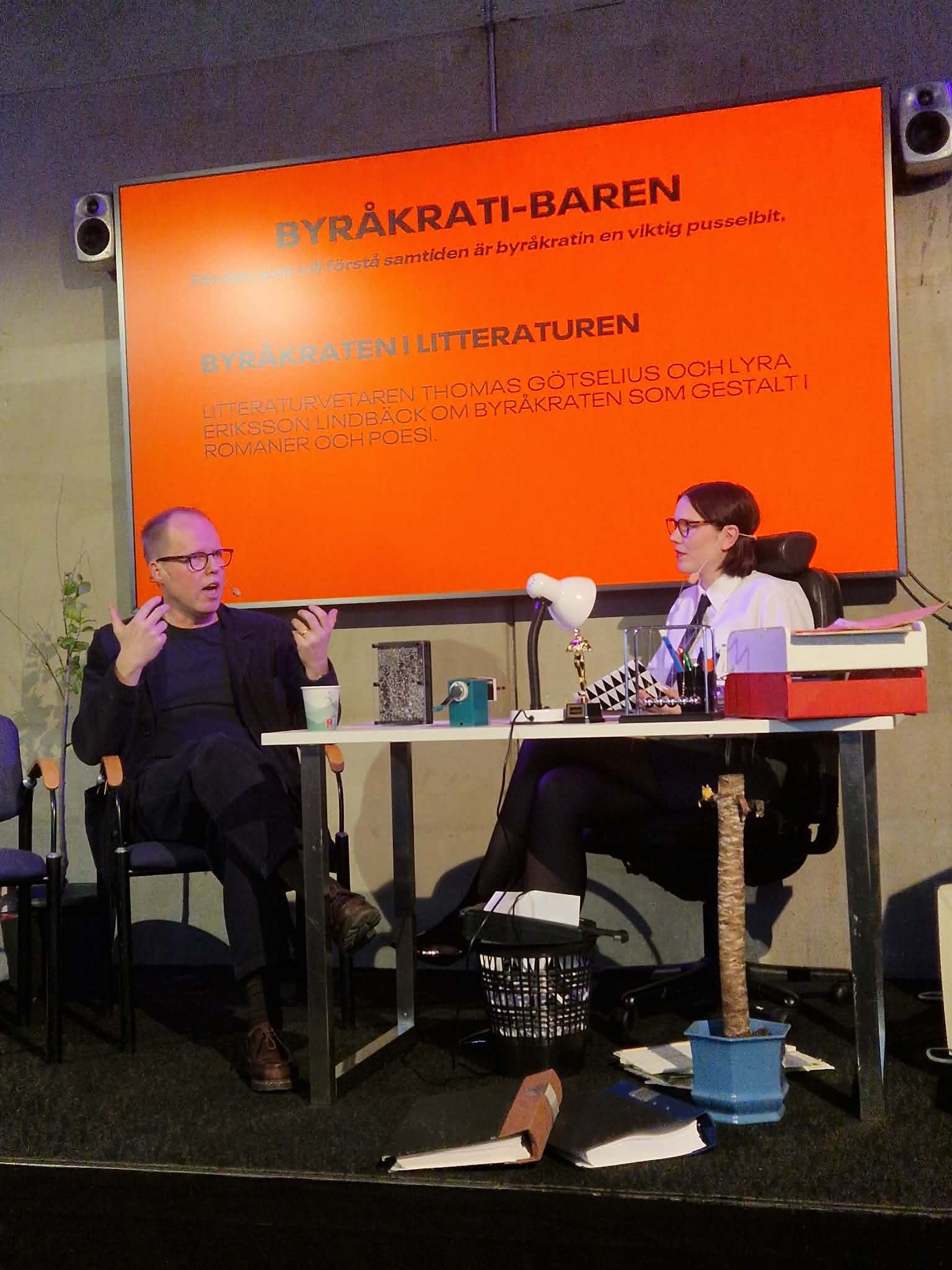
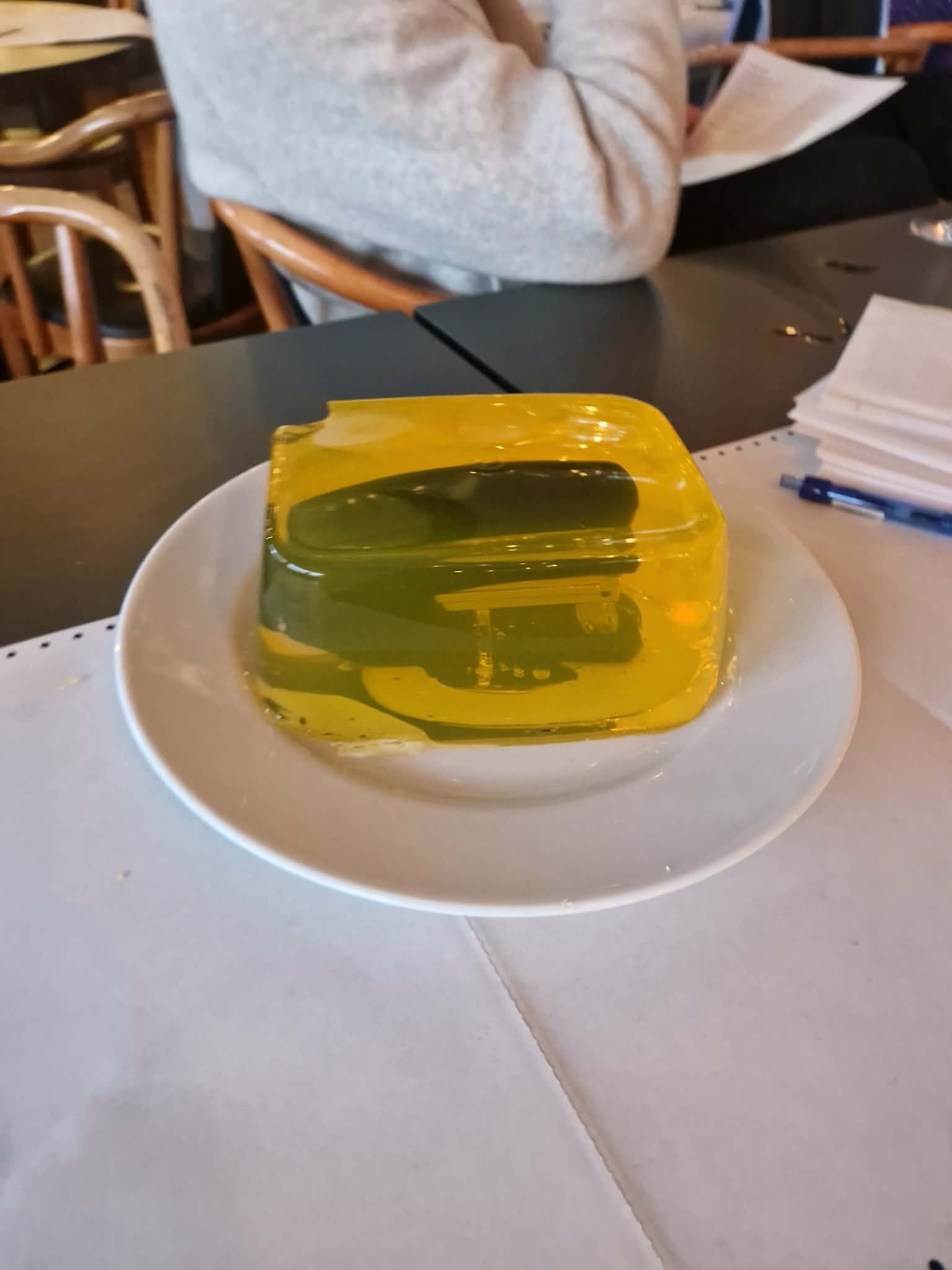
The event doubled as a book release for a box of six booklet-length essays dealing with bureaucracy, commissioned by the research foundation Riksbankens Jubileumsfond. The essays are available in Swedish as free downloadable .pdfs on the project’s website.

Some 500 km to the north, the Swedish cultural complex Mannaminne hosts a Museum of Bureaucracy, started by administration enthusiast and collector Bo-Anders Öberg. Open to the general public, his collection of antiquated office equipment includes anything and everything, from early copy machines, paper clips, briefcases, and pencil sharpeners, to writing machines with or without screens attached. Here’s a quick video tour through the space.

One final entry in our Swedish section: the Ministry for Meaning is a speculative government institution set in 2033 Sweden. A partnership between the design studio SALLY and the Center for Digital Innovation at The Swedish Public Employment Service, this design fiction – less a policy proposal than a provocation – explored what a new type of government institution might look like in a few years.
Moving westward on boreal latitudes: perhaps you’re already familiar with the Monument to the Unknown Bureaucrat?
Installed in 1994 near the Reykjavík City Hall in Iceland, it is a sculpture by Magnús Tómasson, showing (rather predictably) a man with a briefcase. But there’s a twist: his upper body is just a huge block of volcanic basalt. Hard to imagine a more literal image of reification – the functionary is fused with his function, the petrifying procedure takes on a geological scale.
In Focus: Brazil
If you wanted to assemble a canon of Brazilian literature, you could do worse than raiding a personnel archive. To a degree that has few parallels elsewhere, the major Brazilian writers drew their salaries from the state, and their masterpieces were written between (and sometimes about) office hours.
Machado de Assis rose to director at the Ministry of Public Works. Carlos Drummond de Andrade served as section chief and chief of staff at the national heritage agency, a bureaucratic career that has itself become an object of sociological study. The Foreign Ministry at Itamaraty alone employed João Guimarães Rosa, João Cabral de Melo Neto, and Vinicius de Moraes, which must make it the most lyrical diplomatic corps on record.
Lima Barreto worked as an amanuensis, a clerk and drafter, at the War Secretariat. Mário de Andrade directed the Department of Culture of the city of São Paulo. And Graciliano Ramos was both Director of Public Instruction in Alagoas and mayor of the small town of Palmeira dos Índios. The Brazilian state, whatever its other failings, has been an exceptional patron of letters, mostly by accident.
For readers who want to go beyond the personnel files, three dossiers deserve particular attention.
Lima Barreto, a Black author writing from a subordinate position inside a deeply hierarchical apparatus, turned his clerk’s-eye view into the sharpest bureaucratic satire of his era. In his pre-Modernist novel Triste fim de Policarpo Quaresma (1915), the title character is an exemplary and obsessively patriotic civil servant whose faith in State and Nation collides with the actual workings of both: clientelism, authoritarianism, and incompetence. It reads as the tragedy of the idealistic bureaucrat inside a disorganised, authoritarian state.
His short story collection Os Bruzundangas (1922–23) relocates the critique to the fictional republic of Bruzundanga, a thinly veiled First Republic Brazil, where paperwork, absurd hierarchies, political appointments, and the private use of public machinery are catalogued with the precision of someone who filed reports on them for a living.
Machado de Assis, likewise a Black author who rose in the imperial and republican administration, has had his other career reconstructed in Machado de Assis e a Administração Pública Federal, published, fittingly, by the Brazilian Senate itself. The volume connects his bureaucratic trajectory to his fiction and makes an excellent entry point for anyone thinking about how the office shapes a literary oeuvre.
Graciliano Ramos’s mayoral reports have been collected in Relatórios de prefeito de Palmeira dos Índios (1929–1930), often published as O prefeito escritor / Dois retratos de uma administração). These are official administrative reports (budgets, public works, payroll, etc) written with an extraordinary literary quality. An article roughly titled “When bureaucracy is literature” (“Quando a burocracia é literatura: a literariedade em relatórios de Graciliano Ramos”) analyses these reports as literary texts, showing how routine administrative language can become narrative material.
For their contributions to this issue, we’re particularly grateful to Anja Schürmann, Mihai Constantinescu, Ana I. Romero Sire, Cristian Cercel, and Rafael Leite.
Rafael supplied us with all the Brazilian references, among a wealth of other leads included in, but not limited to this issue. On his website, he keeps a running note called Speculative Bureaucracies and Administrative Futurism – a collection point for projects at the intersection of science fiction, public administration, and design.
This concludes our seventh issue. As always, we welcome all forms of stray office ephemera to bureaucritics@gmail.com.
Thanks for reading, and stay tuned for the next dispatch!
Bureaucritically yours,
Alexandra and Jonathan